

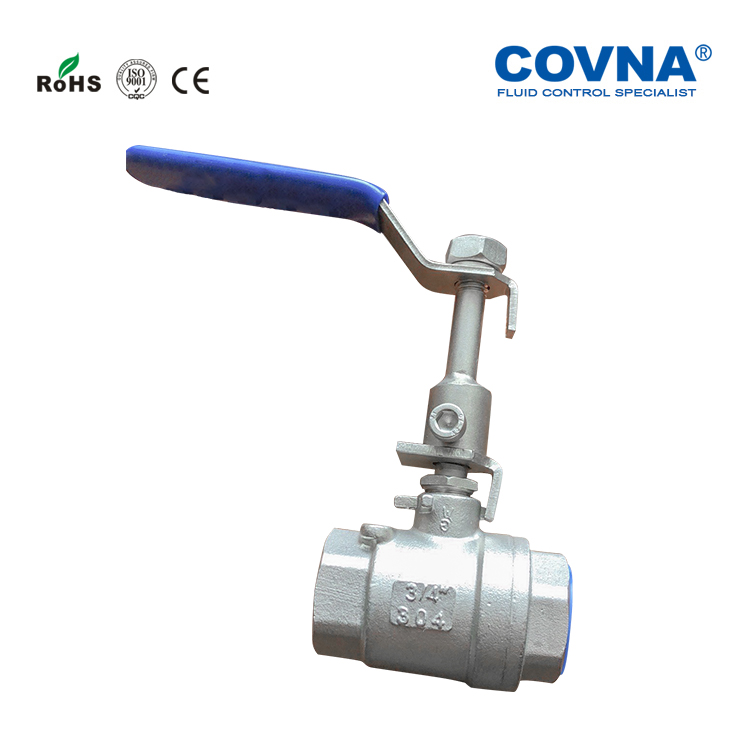


In our country, the valve whose designed temperature is lower than -40℃ is usually defined as cryogenic valve. Cryogenic ball valve is one of the most important equipment in petrochemical, natural gas and other fields. The quality of valve products directly affects whether it can be produced safely, economically and continuously.
The low-temperature series of ball valves produced by our company are mainly suitable for chemical equipment such as ethylene and liquefied natural gas. The cryogenic ball valve is difficult to be processed and manufactured. It outputs low-temperature liquid media such as ethylene, liquid nitrogen, liquid oxygen, liquid hydrogen, etc. This type of media is not only flammable and explosive, but also vaporizes when it rises up. Its volume will expand hundreds of times. It has strong penetration and leaks easily.
The design, manufacture, and inspection of cryogenic valves are very different from those of ordinary temperature ball valves, and the structure of cryogenic valves is somewhat different from ordinary ones. In the research and development of cryogenic valves, in addition to considering the general requirements of ordinary valve structures, the following issues need to be addressed:
1.explosion-proof requirements of low-temperature media to parts;
2. Under low temperature conditions, the harmful effects of cold deformation of parts on the valve;
3. The adverse effect of low temperature on the sealing performance of the stuffing box;
4. After the low temperature valve is closed, the residual media in the valve body will quickly vaporize due to the increase in temperature, causing the problem of abnormal pressure increasing inside the valve body;
5. The valve and its components should have the ability to work for a long time under the low temperature media; that is, a long life;
6. The valve assembly working under low temperature cannot be lubricated. Measures should be taken to prevent the friction parts from being scratched.
In addition to the inspection of room temperature, the cryogenic valve must also be tested at low temperature.
Inspection of normal temperature: it mainly includes shell hydraulic strength test, water pressure, air pressure sealing test, upper sealing test, as well as closing and torque test.
Low temperature test: The main purpose is to test the operating performance and sealing performance of cryogenic valves at low temperatures. The operating performance requires the valve to open and close flexibly, and the moving and the sealing parts must not be scratched or seized; the sealing performance requires that the leakage of the valve sealing surface is less than the allowable leakage.